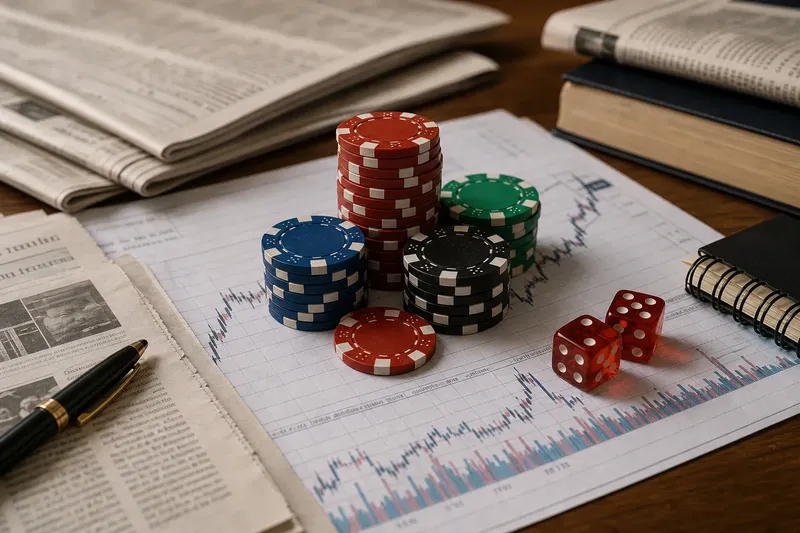
Why Casino Tokens Make Value Feel Touchable
Casino tokens make value feel tangible by turning an abstract balance into a visible object, clarifying how symbols, rules, and exchange shape perception.

Casino tokens make value feel tangible: a player can hold a stack, slide a chip across a table, or place one beside a card. That physical presence is not the same as cash value. A token represents an agreed unit inside a particular setting, and its meaning depends on the rules and people that recognize it.
At UEF, where economics and finance give students language for markets and choice, casino tokens offer a compact way to examine representation. The lesson is not that a chip is money in every sense. It is that a designed object can make an abstract claim feel immediate.
1. A symbol you can hold
Money balances, account entries, and market prices are often displayed as numbers on paper or a screen. A casino token gives a number-like role a physical form. Its color, markings, and shape help distinguish it from other tokens without requiring a player to interpret a line of text each time.
This is representation at work: the object stands for something beyond its material. The chip is made of a substance, but its economic meaning comes from the system that assigns it a role. A plain disc picked up outside the casino would not acquire that role simply because it looked similar.
Touch changes how a value is encountered. A balance on a screen may feel distant; a stack occupies space and can be moved. That difference can affect attention, but it does not alter the underlying terms of exchange.
When comparing tokens, ask what the object represents, not just what it looks like.
2. A unit for comparison
A token can make unlike actions easier to compare by giving them a shared unit. A player may see a wager, a stack, and a payout expressed through the same token system. That common form reduces the need to translate each action back into a separate object or phrase at the table.
Economists use the idea of a unit of account to describe a common measure for recording and comparing values. A casino token can perform a related role within its setting. It helps organize amounts, even though its authority is limited to the context that recognizes it.
Imagine a visitor receives a small stack of tokens before joining a table. The starting point is an unfamiliar game with several possible bets; the visitor sorts the tokens into separate piles before choosing. The expected observable result is a clearer view of how much has been committed to each option, not a change in the value represented by the stack.
A common unit makes comparison easier; it does not make every choice equivalent.
3. Rules behind the object
A token’s meaning relies on convention and procedure. The casino establishes which tokens belong in play, how they are recognized, and what actions they can represent. Staff and players then treat those rules as operative within the venue. Without that shared recognition, the chip is only an object with distinctive markings.
This resembles other forms of institutional value. A transit card, a store voucher, or a digital balance can represent purchasing power within a defined network. Each depends on an issuer, a set of terms, and a way to recognize valid use. The similarities are useful, but the objects are not interchangeable: their permitted uses and conditions differ.
The casino setting makes the boundary visible. A token can be meaningful at one table or within one venue and have no accepted role elsewhere. Its appearance may travel beyond the casino; its institutional meaning does not automatically travel with it.
Look for the rule that gives an object its role before treating it as value.
4. Color and physical design
Tokens are designed to be distinguishable at a glance. Color, edge detail, printed or molded marks, and overall shape can help people sort denominations or identify different token types. These cues turn classification into a quick visual task, rather than a repeated calculation from scratch.
Design also shapes perception. A tall stack looks more substantial than a thin one, and a brightly marked chip attracts attention more readily than an unmarked disc. Those impressions may influence how a person experiences a balance, but appearance alone cannot establish what a token represents or what rules govern it.
The distinction matters in finance education. A symbol can communicate a category efficiently while still requiring interpretation. A chart color, a currency sign, or a highlighted number also relies on conventions that users must learn.
Notice the visual cue, then check the system that assigns it meaning.
5. Separation from cash
Tokens create a layer between a player and the money used to obtain them. Once exchanged, the original cash is no longer the object moving across the table. The token becomes the immediate unit of play, which can make a wager feel different from handing over a banknote.
This separation is representational, not a claim that the token has an independent cash value. The token’s meaning remains tied to the casino’s procedures and the player’s particular circumstances. A person should rely on the applicable terms rather than infer an exchange outcome from the token’s look or feel.
That distance can also affect judgment. A stack is easy to rearrange and move, while cash may carry a more familiar everyday association. Neither form dictates a decision, but each can frame it differently. Recognizing the framing helps a player distinguish the object in hand from the resources it represents.
6. How do tokens represent value?
Are casino tokens money?
A token functions as a recognized unit within a casino’s system, but that does not make it identical to cash or a general-purpose payment method. Its role depends on the venue’s rules and the context in which it is accepted.
Why do tokens have different colors?
Colors and markings help distinguish token types and make them easier to recognize during play. Their meaning comes from the system using them, not from any universal rule about color.
Why can a token feel more valuable than a number?
A physical stack can occupy space and invite touch, so it may command more attention than a balance shown on a screen. That sensory effect changes how value is experienced, not what the token represents under the applicable rules.
Can a casino token be used elsewhere?
Its use outside the setting that recognizes it should not be assumed. An object’s resemblance to a token does not establish that another business, person, or institution will accept it.
7. Reading representation carefully
For students of economics and finance, tokens are a useful prompt to separate an object, its assigned meaning, and the rules behind that meaning. Those layers are easy to collapse when a representation feels concrete. Asking what is being represented—and who recognizes the representation—keeps the analysis precise.
The same questions apply to other market symbols: a balance on an app, a point on a rewards account, or a mark on a trading screen. Each may look like a thing one possesses, while functioning as a record or claim within a particular system. Comparing them does not erase their different terms; it clarifies why representation matters.
Casino tokens make value feel touchable because they give an abstract unit a visible, movable form. Their usefulness as a teaching example lies in that contrast: the object is present in the hand, while its meaning rests on shared recognition. Treat the token as a symbol with boundaries, and the casino setting becomes a clear place to study how value is represented without confusing representation with cash value.